Workouts for people with sedentary jobs
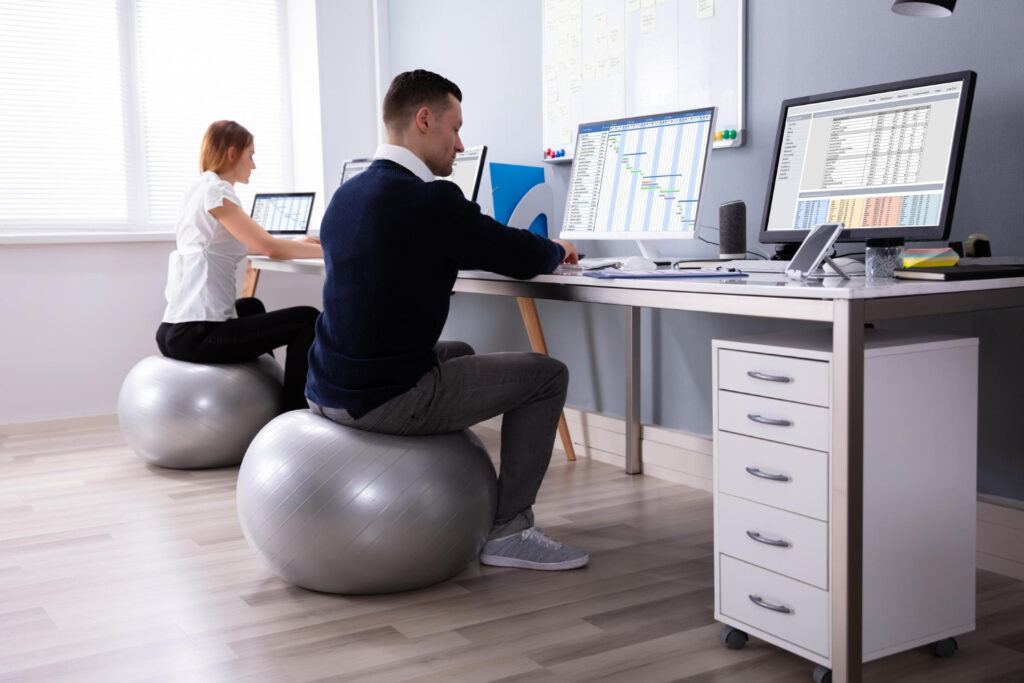
A sedentary lifestyle is now considered one of the main threats to modern human health. When we spend long hours sitting in a chair, our body slowly begins to deteriorate from within. This affects the condition of the spine, heart function, and metabolism. Science says that even one intense workout in the evening can’t totally fix the damage done to your body from eight or ten hours of not moving. To stay healthy, you need a conscious approach to movement that helps make up for the changes that happen in the body of a typical office worker.
How prolonged sitting changes the way our body works and harms our health
When we sit for long periods of time, our body is forced to adapt to this unnatural posture. Blood circulation is the first to suffer. Without muscle movement, blood begins to flow more slowly, resembling a traffic jam. This is especially true for the legs, where it is more difficult for blood to flow back to the heart. This puts extra strain on the blood vessels and can lead to swelling. At the same time, the muscles that are supposed to keep our back straight relax and weaken. As a result, the entire load falls not on the muscle corset, but on the ligaments and intervertebral discs, which over time leads to pain and diseases of the spine.
Metabolic processes also slow down during sedentary work. When muscles are not working, the body stops actively burning fat and sugar. This not only leads to excess weight, but also causes the body to respond less effectively to insulin, which is dangerous to health in the long term. Thus, sedentary work not only ruins our posture, but also the internal chemistry of the body, making us less resilient and more vulnerable to various ailments.
The main goals of training for a sedentary lifestyle to restore strength
For a person who sits a lot, exercise should not be limited to weight loss. The main goal of such training is to restore the body to its proper shape and correct muscle imbalances. The most important task is to engage the deep muscles of the abdomen and back. Imagine them as an invisible living corset that holds your spine. If this corset is weak, any movement can cause injury.
The second important goal is to strengthen the back and buttocks. When sitting for long periods of time, the gluteal muscles fall asleep and stop working. Because of this, the lower back is forced to take on extra load when walking or lifting bags from the store, which causes lower back pain. It is also necessary to restore mobility to the joints, which become stiff and inflexible when sitting. Only a comprehensive approach will help restore the balance between those parts of the body that are overstrained and those that are too relaxed.
The most important muscles and areas that require special attention in terms of exercise
To effectively help your body, you need to know which areas to focus on first.
These are the areas of the body that suffer the most from office work and should be thoroughly worked out in each of your workouts:
- Core muscles
This is not just your abs, but an entire system that stabilizes your entire torso. A strong core is a reliable foundation and the key to a healthy, pain-free lower back.
- Gluteal muscles
These are the second most important muscles. The strength of these muscles directly affects how healthy your knees and lower back will be under stress.
- Chest
When we stare at a monitor for hours, our shoulders slouch forward. Special exercises help open up the chest and return the shoulder blades to their proper position, which improves breathing and oxygen flow to the brain.
- Back of the thigh
These muscles are constantly compressed when sitting. They need to be stretched regularly to relieve tension from the pelvis and spine.
The best types of training for office workers and how to apply them
The choice of specific activities depends on your interests, but experts highlight several key areas that bring maximum benefit.
- Functional training
These are good because they replicate natural movements from everyday life and make the whole body work at once. This teaches the muscles to interact with each other and quickly tones them up.
- Bodyweight strength exercises
Simple squats, lunges, or desk push-ups are great for strengthening muscles and bones. You don’t need any special equipment; you can do these exercises even in a small office.
- Pilates and yoga
These are ideal options for those who sit a lot. They teach you how to breathe properly, improve your posture, and allow you to feel every muscle, restoring lightness and flexibility to your body.
- Mobility and stretching exercises
These exercises should become part of your daily routine. They help relieve tension in the hips and shoulders, which inevitably builds up during the working day.
The combination of strengthening exercises and relaxation reduces the risk of pain and prevents the nervous system from becoming overworked.
It is important to remember that if you have been sitting all day, you should not immediately run a long distance on asphalt. First, you need to strengthen your muscles and warm up your joints so as not to harm yourself.
How much and how often you need to exercise to stay healthy
For good health, it is advisable to do three or four full workouts per week. One session can last from forty-five minutes to an hour. However, the most important secret is not the workout itself, but how often you move during the day. Short breaks for movement during working hours help relieve tension and get the blood flowing.
Experts advise taking active breaks every hour and a half of sitting. Five or ten minutes of light exercise is enough. This could be a walk to get water, a few side bends, or shoulder rotations. Such simple actions improve blood flow to the brain and help you think better. Movement throughout the day should become as much a part of your life as work itself.
Common mistakes when exercising and how to avoid them
To ensure that your workouts are beneficial rather than harmful, it is important to be aware of the main mistakes that beginners often make:
- Lack of warm-up
After sitting for a long time, your joints are like mechanisms without lubrication. Sudden exertion without preparation can lead to serious injury.
- Incorrect back position
People often arch their lower back too much, especially when squatting. It is important to monitor your technique and keep your stomach tight, as your back is already overloaded with work in the office.
- Exercising through acute pain
Pain is your body’s cry for help. If you ignore it, you can suffer a serious injury. Training should be a joy, not a torment.
- Neglecting rest
If you are very tired at work, you don’t need to force yourself to set records in the gym. Sometimes it’s better to just take a walk in the park or do some light stretching. A proper plan always takes time for recovery into account.
FAQ: Answers to frequently asked questions
Is it enough to exercise just once a week?
Unfortunately, this is not enough. The body needs regular exercise to maintain metabolism. One workout cannot undo the damage caused by a whole week of inactivity. It is better to exercise a little, but often.
Is it possible to get good results by training at home without dumbbells?
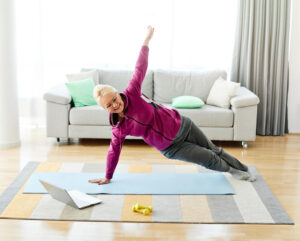
Yes, it is entirely possible. Your own body weight is sufficient for most beneficial exercises. The main thing here is regularity and correct execution of the movements. Many flexibility and strength exercises do not require any equipment at all.
What exercises are considered most important for those who sit a lot?
The most useful exercises are those for the glutes, the muscles between the shoulder blades, and planks to strengthen the abdomen. It is also very important to stretch the hips and chest muscles to avoid slouching.
Do you need to stretch every day or is once a week enough?
It is better to stretch a little every day. It helps relieve daily tension and improves lymph flow. Just ten minutes before bed will help you sleep better and feel more alert in the morning.
Does exercise help you think better and work faster?
Yes, physical activity directly affects the brain. Movement improves blood flow to the head and helps brain cells renew themselves. This improves memory and attention and helps you find solutions to complex problems faster.
About The Author