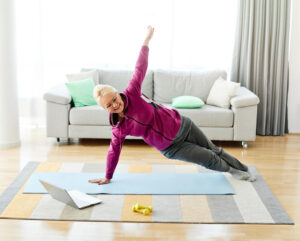
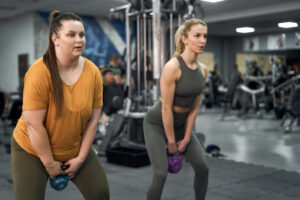
Low-impact workouts as a safe and effective way to stay in shape
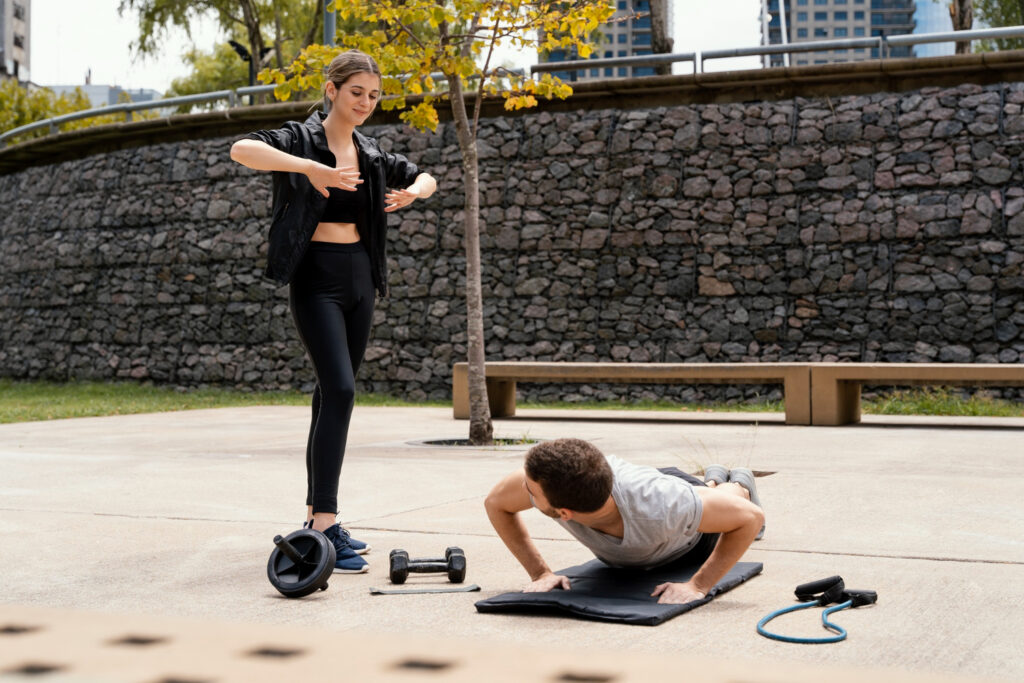
Low-impact workouts are types of physical activity that put minimal strain on your joints and spine. Simply put, these are exercises that do not involve jumping, hard landings, or striking the ground with your feet. Unlike running or jumping rope, your body does not experience harsh “shocks.”
The main rule of such workouts is that at least one foot must always touch the floor, or the load must be distributed gently, as is the case during swimming or exercising on special equipment. Today, doctors and fitness experts consider this approach to be the best way to stay healthy for many years without exhausting the body with extreme loads.
What is low-impact training?
To understand the benefits of such exercises, you need to remember some simple physics. When you run or jump, the force exerted on your knees and back when you land is 3-5 times your own weight. This can be compared to a hammer hitting a joint. If a person is overweight or has old injuries, such “blows” quickly destroy cartilage and cause pain.
This does not happen in the low-impact format. The pressure on the joints here is almost the same as when walking normally. This allows you to train for a long time and effectively, without the risk of injury “out of the blue.”
Key features of such training:
- No flying: You do not lift both feet off the ground at the same time. This eliminates hard landings.
- Smoothness in everything: All movements are performed gently, without jerks or sudden accelerations that can strain the ligaments.
- Constant support: You always feel stable, whether it’s the floor under your feet, the pedals of the exercise machine, or the resistance of the water.
- Attention to muscle work: Instead of using inertia (as with swinging movements), you make your muscles work consciously and slowly. This helps to work them much more deeply.
This approach is ideal if you are overweight, have spinal hernias, knee pain, or are simply returning to sports after a long break.
Benefits for the body
Healthy joints and ligaments
Our joints are like mechanisms that need lubrication. In the body, this role is performed by a special fluid inside the joint. When we move smoothly and without impact, more of this “lubricant” is produced. This helps the joints remain flexible and slows down their aging. Even if a person has already been diagnosed with osteoarthritis, gentle exercise helps to relieve stiffness and reduce pain.
Heart and endurance training
Many people think that the heart only gets a workout when it is “jumping out of your chest.” This is not true. Low-impact activities allow you to keep your heart rate at a moderate, safe level. In this mode, the heart pumps blood efficiently, the walls of the blood vessels are strengthened, and you become more resilient in everyday life: it becomes easier for you to climb stairs or walk for long periods of time.
Strengthening the “deep” muscles
When jumping, mainly large muscles are used. In low-impact training, where balance and control are important, small stabilizing muscles are involved. They act like an invisible corset, supporting your spine and forming correct posture. This is the best prevention for lower back and neck pain, which often plagues office workers.
Calmness and absence of stress
Heavy, exhausting workouts are stressful for the body. In response, cortisol (the stress hormone) is produced, which can interfere with weight loss and cause feelings of fatigue. Low-impact fitness, on the other hand, helps to “unload” the mind. You get physically tired, but you feel energized rather than exhausted.
Examples of low-impact workouts
Today, there are many different types of exercise, so everyone can find something they like. Here are the most popular and effective ones:
- Nordic walking and brisk walking. This is much more beneficial than regular running. If you use special poles, you engage your arms and back, burning more calories without putting strain on your knees.
- Elliptical trainer (orbiter). This device simulates running, but your feet do not leave the pedals. The movement is circular and smooth, like skiing.
- Swimming and water aerobics. In water, a person becomes almost weightless. Water takes up to 90% of the load off your spine. This is the best choice for people who are very overweight or have back problems.
- Pilates. This is a whole system of exercises that focuses on the abdomen, back, and proper breathing. Pilates makes the body toned and flexible by “stretching” the spine.
- Yoga. Helps stretch tight muscles and strengthen them through static poses. It teaches you to feel your body better and maintain balance.
- Strength training without jumping. You can squat, lunge, and do push-ups at a relaxed pace. The main thing is to do it technically and without bouncing.
Are they effective for weight loss?
There is a misconception that “to lose weight, you need to sweat and jump until you drop.” Science says otherwise. Excess fat burns when we expend more energy than we consume, and do so regularly.
Why low-impact workouts help you lose weight:
- You can exercise longer. It’s very hard to jump for 20 minutes, but you can walk at a fast pace or swim for 60 minutes. As a result, you often burn more calories in an hour of gentle exercise than in a short but “explosive” workout.
- Ideal heart rate zone. Fat is best broken down at a moderate heart rate when the body has enough oxygen. Low-impact exercises provide just the right level of exertion.
- Fewer dietary lapses. After intense cardio, you often wake up with a ravenous appetite. Gentle exercise allows you to better control your hunger.
- Consistency. If you don’t feel sore after a workout, you’ll be happy to go to the next one. And consistency is the main secret to successful weight loss.
Who is it especially suitable for?
Low-impact fitness is suitable for absolutely everyone, but for some groups of people it is simply indispensable:
- People over 40: At this age, joints require more careful treatment, and muscles need to be kept toned so that metabolism does not slow down.
- Those who are significantly overweight: Jumping when weighing 100+ kg is a direct path to knee injury. Walking and swimming will help you lose weight safely.
- People with back and joint problems: If you have been diagnosed with osteochondrosis or arthritis, this is not a reason to give up sports. You just need to choose a gentle format.
- New mothers: After giving birth, the body needs time to recover. Jumping can be harmful, but Pilates or walking will help you gently get back into shape.
- Beginners: This is a great way to get started in the world of sports. You won’t burn out in the first week and will gradually get used to the workload.
Low-impact workouts are not just “exercise for the elderly,” they are a modern philosophy of movement. They teach us not to fight our bodies, but to work with them. By choosing this format, you are investing in your future: you will stay fit, energetic, and, most importantly, keep your joints and back healthy into old age. Start with a simple walk or a short yoga routine, and your body will thank you.
FAQ: Answers to frequently asked questions
Is it possible to tone your body without jumping?
Of course. Muscles grow from resistance (the weight of dumbbells, the tension of bands) and the time they spend under load. Slow, controlled squats often give better results for the glutes than fast jumps, where you work by momentum.
Do I need any equipment at home?
In most cases, a mat and comfortable shoes are enough. To enhance the effect, you can buy fitness bands or small dumbbells, but you can also start with your own body weight.
How often should you exercise?
For health and fitness, 3-4 times a week for 40-50 minutes is enough. If your goal is to lose weight quickly, you can add daily 30-minute walks.
Are there any harmful effects of such training?
The only harm can be caused by incorrect technique or ignoring your body’s signals. If you feel sharp pain during exercise, you need to stop. Also, if you have serious heart or spine conditions that are currently flaring up, consult your doctor first.
About The Author