How to recognise emotional stress in a child at an early stage
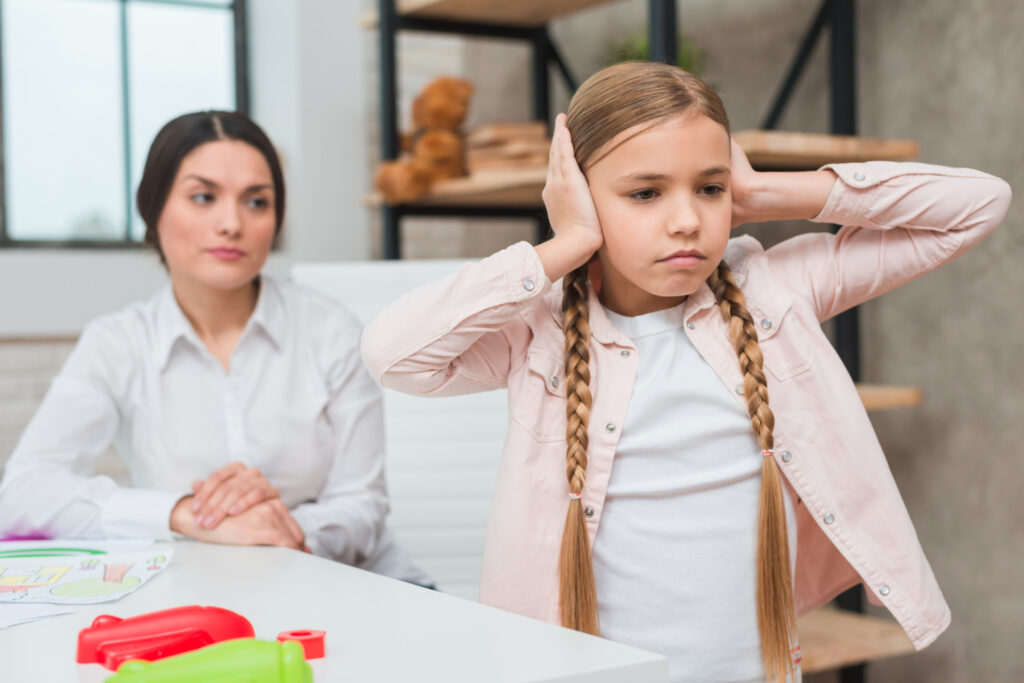
An adult can usually put their anxiety, tiredness or fear into words. Children perceive the world in a completely different way. Due to the immaturity of their brains, children often do not understand the nature of their feelings and are unable to express their emotional distress. Therefore, severe internal stress in children almost always manifests itself through external signs. Changes may occur in their sleeping patterns, appetite, interactions with peers, play behaviour or physical well-being.
That said, stress in itself is not an absolute evil or a sign of illness. Paediatric organisations, including the American Academy of Paediatrics and UNICEF, remind us that short-term, moderate stress serves as a natural part of growing up. A child learns to cope with difficulties when sitting a test, starting at a new nursery, or making up after a row on the playground. A health risk arises when stress becomes chronic, its intensity exceeds the child’s psychological capacity to adapt, and there is no reliable adult nearby to provide emotional support.
Age-related characteristics of stress
There is no single universal pattern for stress in children. Symptoms depend directly on the level of development of the nervous system, age and innate temperament.
Children under three years of age
Toddlers in their first three years of life have not yet separated themselves from their parents and fully reflect the emotional climate within the family. At this age, a child expresses stress through their body and basic reactions.
An infant may suddenly demand to be held constantly, wake up at night crying loudly, and refuse their usual complementary foods.
The main sign of acute stress in very young children is adaptive regression. The child suddenly loses skills they had already mastered: they stop asking to use the potty, give up using a spoon independently or stop saying simple words. In this way, the psyche attempts to return to the safe period of infancy.
Preschoolers aged four to six
At preschool age, emotions are expressed through independent play and new physical habits:
- Repetitive, anxiety-inducing scenarios in play. The child repeatedly makes toys drown, have accidents or fight violently, without the story ever having a happy ending.
- The emergence of compulsive physical habits. The child begins to suck their thumb, pull out their eyelashes, twist their hair, bite their nails until they bleed, or blink frequently.
Preschoolers are often unable to explain the reason for their tears when asked directly by an adult. The logical centres in their brains are still lagging behind the rapidly developing emotional centres, so it is pointless to expect a logical explanation from them.
Primary school children aged seven to twelve
Starting school puts a child’s resilience to the test, and the stress immediately takes its toll on their academic performance and self-esteem.
Parents should be on their guard if three characteristic signs appear:
- A sharp decline in concentration and memory. A capable pupil sits for hours struggling with just a couple of lines of homework, leaves their exercise books behind in class and struggles to understand the instructions for a simple problem.
- Over-generalisation and self-flagellation. Phrases such as ‘I’m the stupidest’, ‘I’ll never be any good at anything’ or ‘nobody in my class is friends with me’ start to appear in the child’s speech.
- Voluntary withdrawal from socialising. The pupil stops going out into the playground to see their friends, gives up their favourite sports club and spends hours aimlessly scrolling through short videos on their tablet.
Teenagers
In teenagers, the outward signs of stress can easily be mistaken for a bad temper or laziness. Stress in teenagers rarely manifests as open tears. Much more often, it hides behind a mask of ostentatious indifference, biting cynicism or sudden outbursts of anger towards family members.
A teenager may completely neglect basic personal hygiene, shut themselves away in a dark room all day, swap their usual, reliable friends for a dubious crowd, or engage in risky behaviour without a thought for the consequences.
Physical signs and autonomic reactions
A child’s nervous system is inextricably linked to their internal organs. When emotions become too overwhelming, the autonomic nervous system sends signals through the body.
The child is not feigning these symptoms. They are genuinely experiencing acute physical pain:
- Cramp-like stomach pains around the navel every morning before leaving for school.
- Pressure-like headaches in the afternoon.
- Bouts of nausea, clammy cold sweat on the palms and a rapid pulse at the slightest sign of anxiety.
- An unexplained rise in temperature to 37.2 degrees by the evening, with no sign of inflammation in blood tests.
Paediatricians emphasise a strict rule. First, the child must be examined by a paediatrician, undergo basic urine and blood tests, and have an ultrasound scan of the abdomen. Only after somatic illnesses have been completely ruled out can the pain be attributed to emotional burnout.
The difference between hard facts and observations
Modern medicine makes a clear distinction between precise physiological mechanisms and data from statistical reviews.
Proven biological laws
Clinical physiology confirms several fundamental facts:
- Excess cortisol suppresses the immune system. Chronic stress inhibits the maturation of protective antibodies, which is why a stressed child starts catching colds every two weeks.
- Growth hormone is secreted during deep night-time sleep. Frequent night-time awakenings and anxiety disrupt sleep phases and can hinder a child’s normal physical development.
- A child’s brain cannot calm itself down on its own. The mechanism of self-regulation only matures through the experience of being soothed together with a stable and balanced parent.
What large-scale studies have revealed
Statistical studies in recent years show consistent patterns in the family environment.
According to the US Centres for Disease Control and Prevention, a child’s anxiety levels directly mirror those of their mother and father. A child unerringly picks up on adults’ tension through facial expressions, gestures and tone of voice, even if parents hide their problems behind closed doors.
Other long-term studies link prolonged screen time to a decline in emotional stability. However, researchers point out that it is difficult to identify the root cause in this situation. An overwhelmed child turns to games and videos as a form of escapism from a difficult reality.
Mistakes parents make when trying to help
In their desire to cheer their child up, close adults often unconsciously make mistakes that only exacerbate the child’s loneliness.
Downplaying a child’s distress is the number one mistake. Phrases such as ‘don’t worry about such nonsense’, ‘it’s only a B’ or ‘adults have it much harder’ show the child that nobody cares about their feelings. The child withdraws into themselves.
Insistent questioning in a raised voice also destroys trust. Demanding that they ‘tell me straight away what’s happened’ causes a frightened schoolchild to go into a state of silent defence.
Overprotection is just as harmful. If a mum rushes to sort out every minor row for her child during break time, the child grows up convinced of their own helplessness.
Five simple steps to help at home
Supporting a child within the family relies on simple, regular everyday routines.
- Restore a daily routine. A predictable bedtime, a warm family dinner at the same time every evening, and a calm start to the day give a child’s nervous system a sense of stability and security.
- Use the ‘reflecting feelings’ technique. Instead of lecturing, say out loud: ‘You’re really angry right now because the trip’s been cancelled; I understand how you feel.’ This defuses intense emotions in a couple of minutes.
- Let them burn off those hormones through movement. A simple brisk evening walk, a ride on a scooter or a swim in the pool help flush cortisol breakdown products out of the muscle tissue.
- Introduce fifteen minutes of quiet time every day. Sit with your child before bedtime, without phones or lectures. Let them decide for themselves whether to talk about something or simply sit in silence together.
- Look after your own well-being. A calm, well-rested and kind-hearted parent is the best remedy for any of a child’s fears.
When a visit to the doctor cannot be postponed
Most childhood crises resolve themselves within two or three weeks with the support of the family. However, there are dangerous situations that require urgent consultation with a child psychiatrist or clinical psychologist.
Urgent medical attention is required if the following signs are present:
- Explicit statements about not wanting to live or feeling worthless.
- Signs of self-harm on the child’s arms or thighs, such as cuts, burns or grazes.
- Sudden weight loss due to a systematic refusal to eat.
- Panic attacks accompanied by a feeling of suffocation and fear of imminent death.
- Outbursts of dangerous aggression towards animals or younger children.
A timely visit to the paediatrician helps to quickly stabilise the child’s condition and prevents severe depressive disorders.
FAQ Answers to frequently asked questions
How can you quickly tell the difference between a tantrum and nervous exhaustion?
A tantrum is aimed at obtaining a specific reward, such as a new toy or sweets, and disappears immediately when the child’s attention is diverted. Stress lasts for days, disrupts sleep and alters the child’s usual behaviour.
Is it true that stomach aches can be caused by a fear of school?
Yes. The intestines are densely interwoven with nerve fibres and react instantly to vascular spasms triggered by the release of adrenaline. However, before seeing a psychologist, take your child to a paediatrician.
Why does a child scream and break things instead of just having a cry?
In children, aggression often acts as a protective shield against an unbearable feeling of helplessness. A child defends themselves by lashing out when they cannot cope with their inner anxiety.
Do soothing children’s syrups and teas help?
Do not give your child sedative herbs or drops without a doctor’s prescription. They can cause allergies, lead to dependency and mask the true symptoms of the illness.
About The Author