How the environment affects human health
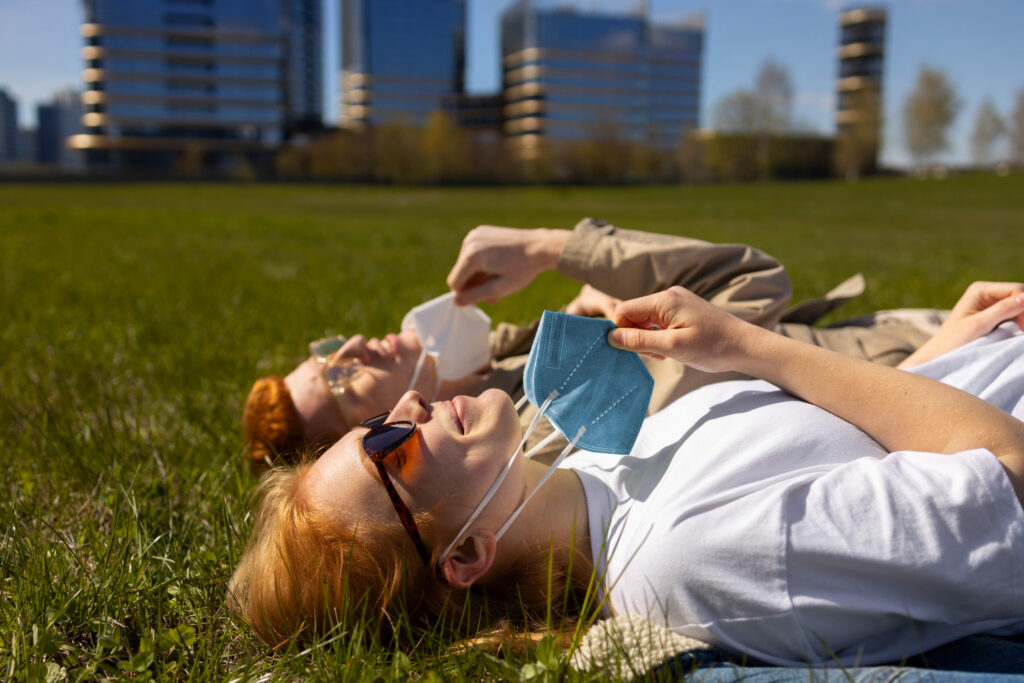
Every day, the human body comes into contact with the environment. People breathe in city air, drink tap water, walk on tarmac and hear the noise of traffic outside their windows. Discussions about the environmental situation often veer towards extremes. Some people are afraid to go outside without a face mask following news reports about smog. Others consider talk of clean air to be an exaggeration and completely ignore environmental warnings.
Doctors and toxicologists assess these risks on the basis of scientific facts. According to the World Health Organisation, a healthy environment can prevent almost a quarter of known diseases. However, the presence of harmful pollutants in the air does not necessarily mean inevitable harm to every resident. The body’s response depends on four factors: the volume of the substance inhaled, the duration of exposure, the toxicity of the compound, and the state of the body’s defences.
The impact of urban pollution on human organs
Harmful substances enter the body imperceptibly and affect various anatomical structures.
The respiratory system and microscopic dust
The respiratory tract is the first to encounter polluted air. The greatest danger is posed by particulate matter consisting of soot, car tyre rubber and mineral dust. Experts refer to such particles as PM2.5, as their diameter is less than two and a half micrometres. The natural filters in the nasal cavity do not trap particles of such a small size.
These microscopic particles penetrate deep into the pulmonary alveoli, damaging tissue and causing chronic inflammation. As a result, lung tissue loses its elasticity, oxygenation of the blood slows down, and people with bronchial asthma experience shortness of breath even whilst walking at a leisurely pace.
The heart and blood vessels
Tiny soot particles are capable of penetrating the walls of the alveoli directly into the blood capillaries. The vascular system reacts to these particles by developing an inflammatory response. The inner lining of the arteries loses its flexibility and goes into spasm.
Blood viscosity increases, which accelerates the formation of blood clots. Cardiology departments in hospitals report a rise in the number of patients presenting with heart attacks and strokes during periods of heavy air pollution.
The Brain and Toxic Metals
Lead from old water pipes, industrial paint or factory dust damages the cells of the nervous system. In young children, lead slows down the maturation of the cerebral cortex. As a result, the child experiences difficulties learning to read, loses concentration and displays increased irritability. Mercury from industrial effluents accumulates in nerve fibres and causes finger tremors and impaired coordination.
The endocrine system
Experts refer to the compounds found in pesticides, poor-quality plastics and synthetic fragrances as endocrine disruptors. The spatial structure of these substances’ molecules is similar to that of the female sex hormone oestrogen. They bind to cellular receptors and transmit false biochemical signals to tissues. As a result, sperm motility is reduced in men, whilst women experience disruption to their menstrual cycle.
Proven facts and scientific observations
Medical researchers make a clear distinction between risks confirmed by laboratory experiments and factors identified through statistical observations.
Established biological facts
There are environmental threats with a direct, proven mechanism of cell damage:
- The ability of PM2.5 microparticles to sustain vascular inflammation and increase the risk of lung cancer is recognised as a proven biological fact.
- Lead dissolved in water destroys developing brain neurons in children and damages the renal tubules.
- Dehydration during the summer heat thickens the blood, increases the strain on the heart muscle and triggers sharp spikes in blood pressure.
Data from epidemiological studies
Other environmental factors are as yet supported primarily by statistical observations.
Scientists have identified a direct statistical link between constant motorway noise exceeding 65 decibels and the development of hypertension. The mechanism of this effect is indirect: night-time noise disrupts sleep, stimulates the release of the stress hormone cortisol, and this physiological stress in itself damages blood vessel walls.
A similar situation is observed in studies of microplastics in food and drinking water. Scientists are detecting polymer particles in human tissues; however, medical science is still investigating the precise doses capable of triggering specific pathological processes.
For this reason, doctors make an important clarification: the presence of a potentially harmful factor in the urban environment does not automatically cause disease unless the body has been exposed to a critical toxic dose.
Vulnerable population groups
The same concentration of harmful pollutants in the air has different effects on people of different ages and states of health.
Young children
Young children are the first to experience the negative effects of pollution. A child’s liver and kidneys do not yet possess sufficient enzymatic capacity to neutralise toxins rapidly. Furthermore, for every kilogram of body weight, a child inhales twice as much air as an adult. In addition, due to their shorter stature, children are closer to car exhaust pipes, where concentrations of heavy pollutants are at their highest.
Pregnant women
Soot microparticles and chemical toxins cause spasms in the blood vessels of the placenta. The developing foetus receives less oxygen and nutrients, which increases the risk of intrauterine growth restriction and low birth weight.
Older people
Older people already have age-related changes in their blood vessel walls. Additional inflammation caused by smog or overheating on hot days can easily trigger hypertensive crises and worsen the course of heart disease.
Ways to protect yourself in adverse conditions
You cannot completely isolate yourself from the external environment, but you can significantly reduce your exposure to toxins through simple everyday measures.
- Monitor the air quality index via a mobile app. If the pollution index exceeds 150 points, cancel your outdoor workout and do your warm-up at home.
- Choose routes away from major roads. A distance of forty metres into residential areas reduces the concentration of heavy particulate matter in the air by almost half.
- Ventilate your home during safe times. In towns and cities with industrial sites, open windows at night or early in the morning before traffic congestion sets in. If your windows face a busy road, keep the vents closed and use domestic HEPA-grade air filters.
- Do not drink untreated water from unverified wells or old pipework. Simply boiling water kills bacteria and viruses, but does not remove dissolved heavy metal salts or pesticides. To purify water, use domestic reverse osmosis filters or bottled water from reputable manufacturers.
- Observe safety precautions when cleaning your home. Only use corrosive chlorine-based cleaning products with the doors open and the ventilation switched on, and protect your hands with thick rubber gloves.
A combination of individual actions and systemic solutions
A domestic air purifier and washing your shoes after returning from outside provide reliable protection inside the flat; however, household appliances are unable to eliminate the effects of industrial emissions and major accidents.
To safeguard residents’ health in the long term, systematic urban planning measures are required: relocating freight traffic outside residential areas, protecting city parks, modernising water treatment facilities, and monitoring emissions from factories. Green spaces act as effective natural filters: tree canopies trap tonnes of dust over the course of a season.
However, clean air will not protect a person’s heart if they smoke a packet of cigarettes a day, consume ultra-processed food and lead a sedentary lifestyle. Environmental conditions form the general backdrop to a person’s life, but lifestyle, sensible habits and timely medical monitoring remain the key factors in health.
FAQ Answers to frequently asked questions
Can a domestic air purifier protect the lungs?
Yes. Devices with a high-efficiency particulate air (HEPA) filter can trap up to ninety-nine per cent of fine dust, soot and pollen. Users must replace the filter elements in good time, following the manufacturer’s instructions.
Does boiling make any water completely safe?
No. Boiling kills bacteria and viruses, but does not remove lead salts, nitrates, pesticide residues or petroleum products from the water.
How does road noise raise blood pressure?
The constant night-time hum of engines disrupts the deep sleep phases. The nervous system increases the secretion of adrenaline and cortisol, which causes blood vessels to constrict and blood pressure to rise.
Is urban smog dangerous for a young, healthy person?
Short-term exposure to smog causes irritation of the mucous membranes of the eyes and upper respiratory tract, which subsides quickly. The main health risk comes from living for many years in an area with high levels of air pollution.
Does a standard medical mask protect against smog?
No. A standard medical mask allows PM2.5 dust microparticles to pass through the gaps at the sides and through the fabric. Only tightly-fitting respirators with FFP2 or FFP3 filtration ratings provide protection against airborne microparticles.
About The Author