How to stop comparing yourself to others in the gym
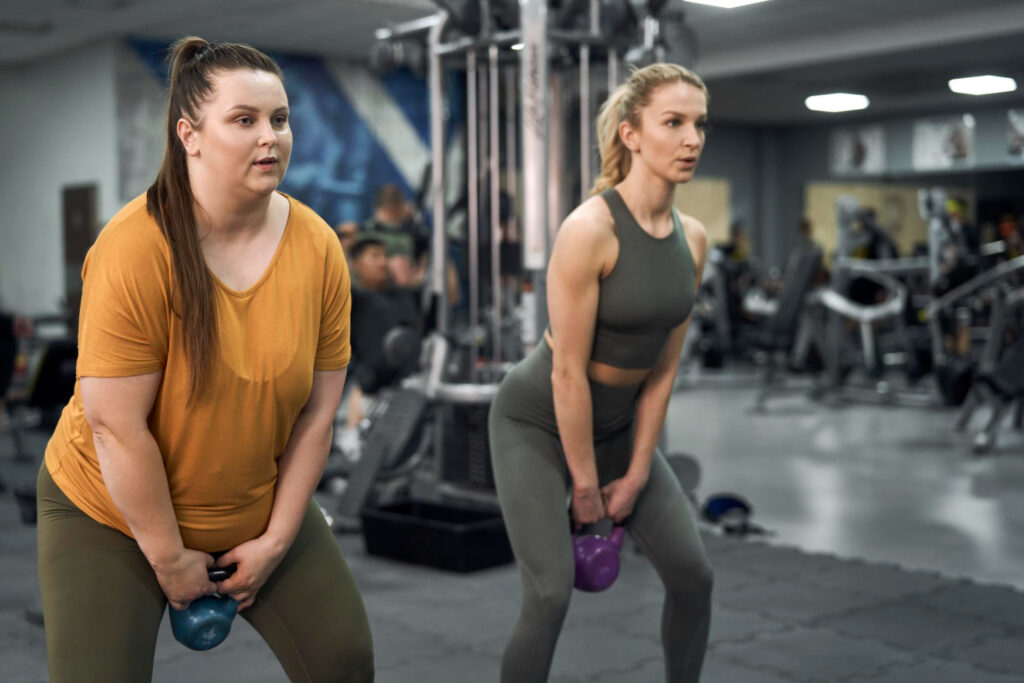
Most people come to the gym with simple goals. They want to improve their health, get rid of shortness of breath, relieve work-related stress and restore their body’s vitality. But after just a couple of months, their attention often shifts to those around them. They start automatically assessing the weight on someone else’s barbell, the definition of their gym neighbour’s abs, or the running speed on the next treadmill.
The habit of looking around is natural from the point of view of evolutionary biology. For millions of years, the human brain has learnt to compare itself with others in order to determine its position within a group and to spot danger in good time. The difficulties arise when other people’s results become the main measure of one’s own worth. In such a situation, sport turns from a source of energy into an exhausting test. This path almost always leads to burnout, injury and a complete abandonment of training.
Why perfect sports photos create an illusion
In the gym, we see only the outward appearance of other people’s successes: the kilograms lifted and the size of their muscles. On social media feeds, this picture is distorted even further. In their photographs, the photographers use professional lighting, flattering angles, specific muscle contractions and a rigorous selection process.
In psychology, images promoting the cult of flawless bodies are referred to as ‘fitspiration’.
A large-scale meta-analysis from 2026 brought together twenty-six scientific studies involving more than six thousand young people. This analysis confirmed a clear pattern. Regularly viewing idealised images reinforces the habit of comparing oneself to others, drastically worsens one’s mood and pushes people towards excessively strict diets.
At the same time, the researchers clearly distinguish between two types of scientific data:
- Experiments confirm a direct short-term effect. When a person is shown edited images of idealised figures, their body satisfaction decreases within minutes and their internal self-criticism is triggered.
- Long-term observations reveal a consistent link between following fitness accounts and the development of anxiety. However, researchers emphasise an important detail: this link works both ways. People with inherently vulnerable self-esteem are significantly more likely to follow such accounts themselves.
A useful skill is the ability to separate hard facts from destructive emotions. The realisation that an athlete can lift a heavy barbell thanks to ten years of training and their genetics helps one to assess the process objectively. Judgemental thoughts about one’s own inadequacy destroy motivation and have no bearing on athletic development.
Why different people’s bodies progress at different rates
Directly comparing yourself to a training partner makes no physiological sense. Even if two people follow the same training programme, sleep the same amount and eat the same foods, their bodies adapt at different rates.
Every person has innate anatomical characteristics that cannot be changed through training:
- The length of the arms, legs and torso. A person with short thighs and a long torso finds it naturally easy to perform deep squats with heavy weights. An athlete with long thigh bones, when performing the same movement, is forced to lean forward significantly, which puts increased pressure on the lower back.
- The points where tendons attach to bones. A shift in the tendon’s attachment point by just a couple of millimetres alters the mechanical lever. This enables the muscle to generate greater force even without a significant increase in size.
- The ratio of muscle fibre types. A predominance of slow-twitch fibres provides high endurance for long-distance running. Fast-twitch fibres are responsible for explosive power and increase in size much more rapidly.
In addition to anatomical factors, there is the individual’s personal life context. Past injuries, sporting experience in childhood, hormonal balance, everyday stress and work patterns all determine the rate of recovery. Someone with a sedentary office job and chronic sleep deprivation recovers much more slowly than a personal trainer, for whom sport and rest form the basis of their profession.
How to assess your progress without relying on a mirror
Stopping comparing yourself to others requires a new yardstick for assessment. In sports medicine, the most reliable benchmark is considered to be monitoring your own progress relative to your starting point.
Visual changes to the body always take time to become apparent. Muscle fibres take weeks to adapt, whilst fluctuations in fluid balance within the tissues often create a false impression of stagnation. At the same time, extensive restorative work is already taking place within the body, which cannot be seen externally straight away.
Instead of relying on a reflection in the mirror, it is far more reliable to track objective functional indicators:
- Movements during exercises become more precise and effortless.
- The number of repetitions per set increases without compromising technique.
- Breathing remains steady, and the heart rate quickly returns to normal after climbing the stairs.
- The usual tension in the lower back and neck subsides after a day’s work.
- Energy levels remain stable throughout the day, and sleep becomes deeper.
Sometimes, taking a timely break is a sign of a mature attitude towards oneself. The decision to skip a session if you have cold symptoms or to reduce the weight you’re lifting when you’re very tired protects your health more effectively than trying to keep up with someone else’s training pace at any cost.
How to customise your social media feed to protect your peace of mind
You cannot completely isolate yourself from other gym-goers, but you can control the flow of information on your smartphone. If scrolling through your feed leaves you feeling guilty about eating or relaxing, you need to review your list of follows.
A few simple steps can help maintain your psychological well-being:
- Unfollow accounts that idealise unattainable beauty standards and devalue a normal lifestyle.
- Follow profiles of sports doctors, rehabilitation specialists and trainers who explain the biomechanics of movement and the physiology of health in an accessible way.
- Stop using photos of fitness models as the only benchmark for your own figure.
- Ask yourself about the practical benefits. Instead of dwelling on someone else’s six-pack, ask yourself how your current workout helps your joints and spine function pain-free.
When sport ceases to be an attempt to impress those around you, training regains its original purpose. It begins to promote health and strengthen the body.
Signs that training is turning into compulsive behaviour
In fitness, there is a fine line between a healthy passion for sport and obsessive behavioural disorders. A constant desire to outperform others can develop into a medical problem.
Look out for the following warning signs:
- Feeling acute anxiety and guilt when you miss a single training session.
- Continuing to exercise despite sharp pain, injuries or whilst ill with a fever.
- A desire to ‘work off’ every meal on the gym equipment.
- A constant search for imaginary flaws in one’s appearance.
- Withdrawing from socialising with loved ones and from work commitments in favour of a strict exercise schedule.
In clinical practice, such behaviours are described as muscle dysmorphia and compulsive exercise. These conditions are not linked to a lack of willpower and constitute psychological disorders. If these symptoms persist, it is advisable to seek help from a psychotherapist or clinical psychologist.
Healthy fitness is intended to strengthen the body and expand a person’s everyday capabilities. Genuine self-care is based on respect for one’s own strengths and the body’s natural characteristics, without the need to prove one’s superiority to those around them.
FAQ: Answers to frequently asked questions
Is it normal to pay attention to other people’s results at the gym?
Yes. This is a natural reaction of human attention to the surrounding environment. The problem only arises when other people’s sporting achievements devalue your own efforts and dampen your mood.
Why does browsing fitness accounts put you in a bad mood?
Experiments confirm that the human brain often mistakes edited photographs for the natural norm. As a result, the viewer feels they’re falling behind, and their self-esteem plummets.
Do you need to delete your social media accounts entirely for peace of mind?
There’s no need for that. It’s enough to remove displays of unrealistic beauty standards from your feed and keep useful content on exercise technique, joint health and recovery.
How can you track your progress if the scales aren’t moving?
Focus on measures of endurance, sleep quality, joint mobility and heart rate recovery time. Beneficial changes within the body’s tissues often occur without noticeable shifts in body weight.
Should a fitness enthusiast aim to meet sporting standards?
Standards are a tool for professional athletes. In recreational fitness, the only things that matter are the safety of your movements and your own personal positive progress.
What should you do if you feel very anxious about missing a training session?
Remind yourself that your fitness level won’t disappear after a couple of days’ rest, and that your ligaments and nervous system need regular recovery. If your anxiety persists, discuss this with a specialist.
About The Author