The Effect of Yoga on Flexibility and Joint Mobility
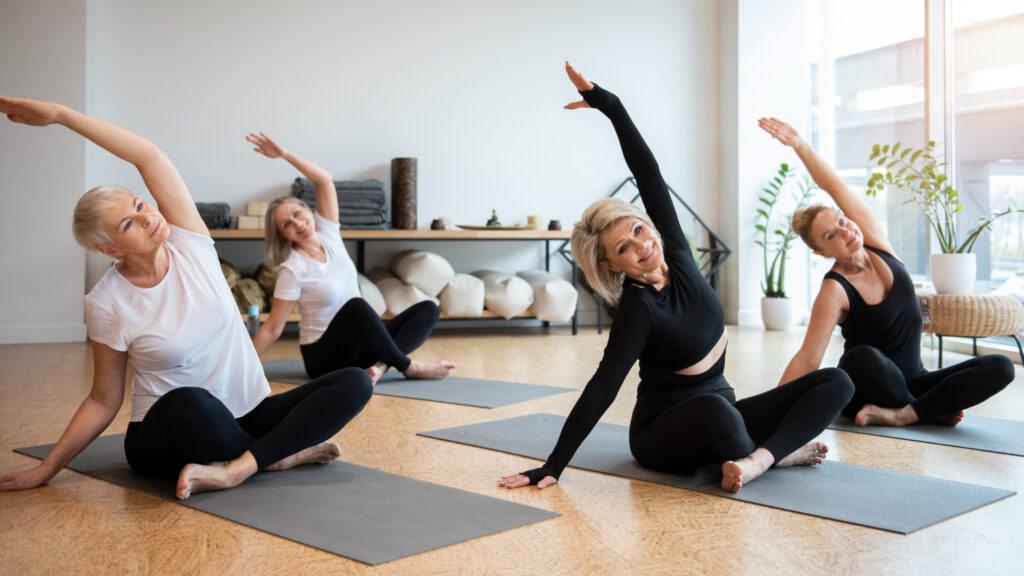
In recent decades, yoga has ceased to be viewed solely as an ancient spiritual practice and has become a subject of study in sports medicine, physiotherapy and rehabilitation science. Contemporary research shows that regular yoga practice can have a positive effect on flexibility, joint mobility, muscle control and overall quality of movement. However, this effect is not linked to achieving extreme stretches, but rather to the gradual adaptation of the musculoskeletal and nervous systems.
In clinical practice, specialists are increasingly encountering the consequences of a sedentary lifestyle. Prolonged computer work, a lack of physical activity and a limited range of movement lead to reduced joint mobility, muscle tension and poor posture. In this context, yoga is becoming one of the tools for restoring natural physical activity.
How yoga affects muscles and joints
Flexibility is not determined solely by the length of muscle fibres. Physiologically, it depends on the complex interaction between muscle tissue, tendons, connective tissue structures and the central nervous system. When asanas are practised regularly, the following processes occur:
- controlled stretching of muscle-tendon units, which improves the elasticity of the fibres;
- a reduction in protective muscle tone and a decrease in local tension;
- stimulation of proprioceptors, which enhances the precision of movement control by the cerebral cortex.
Restricted range of motion is often caused not by physical stiffness of the fibres, but by a protective reaction of the nervous system. During rapid stretching, the myotatic reflex is triggered, causing the muscle to contract to prevent injury. Systematic practice reprogrammes this system:
- it reduces the sensitivity of muscle spindles;
- activates the Golgi tendon organs, which reflexively relax the muscle;
- helps the brain adapt to the new length of the fibres, perceiving it as safe.
The effects of different styles of yoga on the body
The choice of yoga style determines the nature of the mechanical and physiological effects on the musculoskeletal system. Different styles address specific objectives:
- Hatha yoga: classical static asanas held for moderate durations. Ideal for gradually and safely increasing the elasticity of skeletal muscles.
- Vinyasa flow: a dynamic practice where movements are synchronised with the breath. It warms up muscle fibres, develops active mobility and overall endurance.
- Yin yoga: passive holding of asanas for several minutes. Aimed at stretching deep connective tissue structures, fasciae and ligaments.
- Iyengar Yoga: emphasises anatomical precision and the use of props such as blocks or straps. Suitable for therapeutic restoration of mobility following injuries.
Yoga, Ageing and the Prevention of Mobility Limitations
The ageing process is accompanied by natural structural changes in the musculoskeletal system. Without adequate physical activity, the following processes occur in the body:
- a reduction in collagen synthesis, leading to a loss of elasticity in ligaments and tendons;
- a decrease in the volume and density of muscle tissue;
- a reduction in the production of synovial fluid, which increases friction within the joint.
Regular yoga practice slows down these processes. The main benefits of the practice for preventing age-related changes are:
- proven improvement in functional mobility among older adults;
- the ability to adapt movements to individual anatomical limitations;
- gentle engagement of the joints without impact loads.
In rehabilitation medicine, exercises are used as an adjunctive treatment for chronic back pain, but only on the basis of an accurate medical diagnosis.
A modern perspective: the quality of movement is more important than complex poses
The popularisation of extreme asanas in the media creates a false impression of the aims of training. From a biomechanical perspective, excessive flexibility without muscular control is dangerous for joint health. A balance between mobility and stability is required. Excessive stretching without strengthening the stabilising muscles leads to instability and micro-injuries to the joint capsules. A therapeutically effective practice combines:
- a controlled increase in the range of motion in the joints;
- the development of isometric muscle strength to hold the joint surfaces in the correct position;
- training in movement coordination and control of breathing patterns.
The effect of yoga on the psychophysiological state
The condition of the skeletal muscles is closely linked to the activity of the autonomic nervous system. Chronic stress keeps the body in a state of mobilisation, which is accompanied by a persistent increase in muscle tone in the neck, shoulders and lower back. Yoga addresses this problem through a comprehensive approach:
- physical exercises are combined with mindful breathing, which stimulates the vagus nerve;
- the parasympathetic division of the nervous system, responsible for rest and recovery, is activated;
- there is a reflexive reduction in skeletal muscle tone and the release of tension.
Regularity is essential for restructuring neuromuscular connections. Short sessions of 15–20 minutes, 4–5 times a week, are more beneficial for the joints and the nervous system than a two-hour session once every two weeks.
FAQ: Answers to frequently asked questions
Can yoga really improve flexibility?
Yes. Regular practice adapts the nervous system and increases tolerance to stretching. The joints gradually regain their necessary physiological range of motion.
Do you need to be flexible to start practising yoga?
No. Physical flexibility is the result of regular practice, not a prerequisite for starting. For beginners, there are simplified versions of asanas using props such as blocks and straps.
Can yoga replace strength training?
Not entirely. Static and dynamic asanas develop the strength of stabilising muscles; however, to fully prevent age-related muscle loss, additional training with progressive resistance is required.
Is yoga safe if you have back pain?
Only during remission and under the supervision of a rehabilitation specialist. In cases of spinal conditions, deep twists, sharp bends and axial loads should be completely avoided.
How often should you practise yoga to improve mobility? Regular stimulation is needed to re-establish neuromuscular connections. The optimal routine for most people is to practise 3–4 times a week for 30–40 minutes.
About The Author