New advances in medical technology
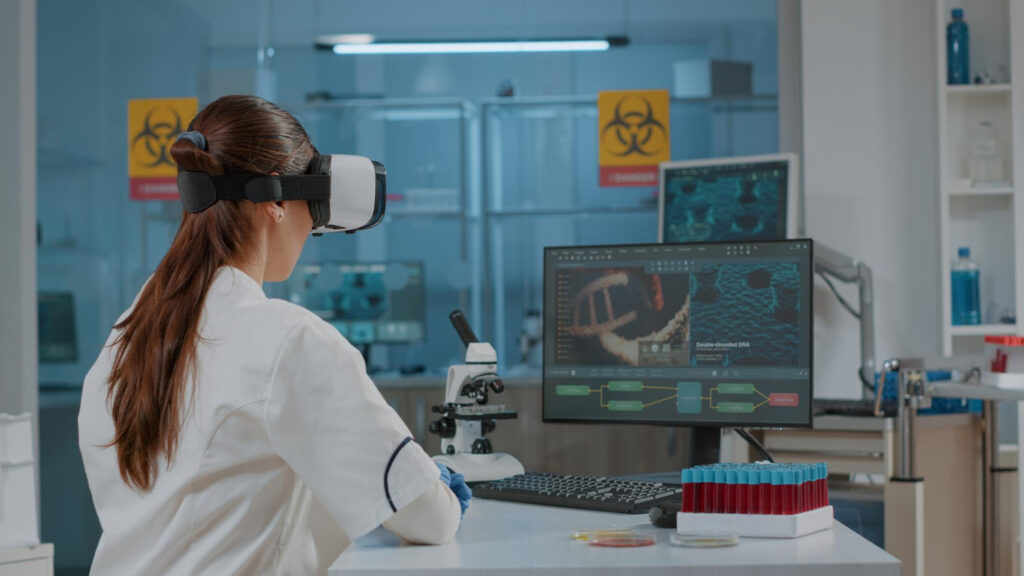
When a serious diagnosis is suspected, what matters to the patient is not general statistics, but the accuracy of the diagnosis and the reliability of the tools in the doctor’s hands. Modern medicine is moving away from standardised protocols towards a strategy of high-precision health engineering. The main goal of technology today is to eliminate the human factor at critical junctures and to precisely correct biological malfunctions in a specific organism.
Artificial intelligence in medicine
Clinical practice shows that even the most experienced radiologist is prone to natural fatigue after a 12-hour shift. When reviewing the 150th CT scan of the day, the human eye may fail to spot a tumour measuring just a couple of millimetres, which visually blends in with the surrounding tissue. It is in precisely such situations that artificial intelligence (AI) becomes an indispensable aid.
How it works in practice:
AI in medicine is not a replacement for a doctor, but a super-powerful ‘digital vision’ with access to a database of millions of verified clinical cases.
- Technical reason: The algorithm analyses the pixel structure of the image and compares it with global databases of pathologies (PubMed, Science) in a fraction of a second.
- Consequences of ignoring it: A tumour missed at the first stage may transform into an inoperable form within a few months.
- Practical conclusion: The implementation of clinical decision support systems (CDSS) establishes a ‘double-check’ standard. When an image is analysed simultaneously by a doctor and an algorithm, the likelihood of a diagnostic error is minimised.
Robotic surgery
Traditional operations are often associated with tissue trauma, significant blood loss and a lengthy rehabilitation period. Even the capabilities of laparoscopy are limited by the physiology of the human hand: a surgeon’s hand cannot rotate 360 degrees, and natural microtremor (a barely perceptible trembling of the fingers) is present in everyone.
Advantages of robotic systems (e.g. Da Vinci):
- Precision manoeuvrability: The robot’s instruments possess degrees of freedom beyond the capabilities of the human wrist, allowing work in the most hard-to-reach areas.
- 3D visualisation: The surgeon views the surgical field with 10x magnification in 3D, creating an ‘immersive’ effect within the body.
- Motion stabilisation: The system completely filters out the surgeon’s hand tremors, ensuring absolute precision for every incision.
Clinical example:
During pelvic surgery (for example, when removing tumours of the prostate or uterus), it is critically important not to damage the nerve plexuses responsible for bladder function and reproductive function. The robot allows the procedure to be performed with millimetre-level precision, preserving the patient’s full quality of life.
Personalised medicine and genetic technologies
For a long time, medicine relied on standard protocols: the same drugs were prescribed for the same diagnosis. However, clinical observations confirm that the same drug can be a lifesaver for one patient and completely ineffective or even toxic for another. The reason lies in the individual’s genetic code.
The modern approach:
Genetic sequencing (DNA analysis) allows us to determine in advance how the body will metabolise a specific drug.
- The essence: CRISPR gene-editing technology makes it possible to precisely correct defective sections of DNA – comparable to correcting a typo in a software code.
- Practical benefits: In oncology, this paves the way for targeted therapy. The drugs strike exclusively at tumour cells without damaging healthy organs, unlike aggressive chemotherapy. If standard treatment fails to produce results, experts recommend conducting a genetic test to adjust the strategy.
New diagnostic technologies
Modern diagnostics aims for maximum non-invasiveness. Doctors try to avoid unnecessary punctures and incisions (invasive procedures) – if information can be obtained by other means.
Liquid biopsy:
This is a breakthrough method that allows signs of cancer to be detected through a routine blood test. The tumour begins to release fragments of its DNA into the bloodstream long before the growth becomes visible on an MRI or ultrasound scan.
- Applications: The method is indispensable for monitoring recurrence after treatment. Patients no longer need to undergo regular painful punctures – a simple blood test is sufficient to confirm that the disease is not active.
- Early detection: New biomarkers enable the diagnosis of neurodegenerative processes (Alzheimer’s and Parkinson’s diseases) 5–10 years before the first clinical symptoms appear, giving doctors precious time to protect the brain’s neurons.
Wearable devices and digital monitoring
Smartwatches and medical sensors have evolved from fitness gadgets into serious tools for preventive medicine, operating 24/7.
Clinical scenario:
A patient may experience an episode of dangerous arrhythmia at night or whilst walking, but by the time they visit the clinic and an ECG is taken, their heart rate has returned to normal. A ‘smart device’ records this episode in real time.
- Result: The doctor obtains an objective picture of the patient’s heart function in their natural environment, rather than in the sterile conditions of a clinic. This allows for the timely identification of stroke risks and the prompt prescription of anticoagulants.
- Trust criterion: Experts emphasise that for medical purposes, only devices with the appropriate certification (FDA, CE or national medical licences) should be used.
Developments in neurotechnology
Neurointerfaces have become a real lifeline for patients who find themselves ‘trapped’ in their own bodies due to paralysis or severe neurological injuries. The technology creates a direct communication channel between the brain and the outside world.
How it works:
Special sensors read electrical impulses from the cerebral cortex and convert them into commands for a computer or a robotic prosthesis. Modern systems already allow completely paralysed people to control a cursor on a screen, type text or grasp objects with a mechanical hand using only the power of their thoughts.
Artificial intelligence in drug development
Humanity faces a global threat: antibiotic resistance. Bacteria are evolving faster than scientists can develop new drugs. The traditional search for a new molecule takes up to 15 years and requires billions in investment.
The role of artificial intelligence:
Generative algorithms are capable of calculating trillions of molecular combinations in a matter of weeks, identifying those structures capable of overcoming the defences of superbugs. This is the only effective way to avoid a scenario in which a common infection once again becomes deadly – as was the case in the pre-penicillin era.
What challenges remain
Despite technological optimism, the expert community identifies a number of limiting factors:
- High cost: Robotic surgery and personalised gene therapy remain expensive and are not always covered by standard insurance.
- Cybersecurity: Medical data and genetic profiles require unprecedented protection, as their leakage could have fatal consequences for privacy.
- Overdiagnosis: There is a risk of detecting microscopic abnormalities that would never have developed into actual disease, but which may trigger unnecessary and aggressive treatment.
What this means for patients
Technology gives doctors and patients the most valuable resource of all – time.
- Time to catch a disease before symptoms appear.
- Time to perform surgery with minimal risk of complications.
- Time for a swift return to a full life.
It is important to understand: technology does not replace the doctor, but it greatly enhances their capabilities. Clinical reasoning, medical experience and empathy remain the foundation upon which modern high-tech care is built.
A specialist’s practical conclusion
Modern medicine is moving towards greater transparency regarding the human body. It is becoming increasingly difficult for diseases to go unnoticed.
- Recommendation: If there is a family history of serious hereditary diseases, genetic screening is not a luxury but a sensible precaution.
- Choosing an approach:
- When looking for a clinic, you should focus not on the number of ‘innovative’ slogans, but on the availability of modern equipment (expert-class MRI, robotic consoles) and specialists who know how to work according to international protocols.
- Conclusion: The future of medicine lies in the symbiosis of the human mind and machine precision, aimed at preserving the quality of life for each individual.
FAQ: Frequently Asked Questions
Can a robotic system make a mistake on its own?
No, a robot is a tool in the surgeon’s hands, not an autonomous mechanism. It does not make independent decisions and does not perform movements without a direct command from the doctor. Its task is to make the movements of the human hand ultra-precise.
How reliable is a diagnosis made by artificial intelligence?
AI does not make a definitive diagnosis in the legal sense. It provides a report which the doctor is obliged to double-check. However, the accuracy of the algorithms in image analysis is already on a par with that of the world’s leading experts.
What is the point of a genetic test if a person feels healthy?
A genetic profile allows for the creation of a personalised risk assessment. By knowing about a predisposition, for example, to thrombosis or metabolic disorders, one can adjust their lifestyle and preventative measures so that the disease never develops.
Does a liquid biopsy replace a conventional tissue biopsy?
At this stage, liquid biopsies are most commonly used for early screening and post-operative monitoring. In complex cases, doctors still require a tissue sample for histological examination to confirm the diagnosis.
Which wearable devices are considered the most accurate?
Devices that have been certified by medical regulators are the most reliable. The use of consumer gadgets is useful for general self-diagnosis, but any alarming results from them require confirmation using professional medical equipment.
About The Author