When the body really needs dietary supplements
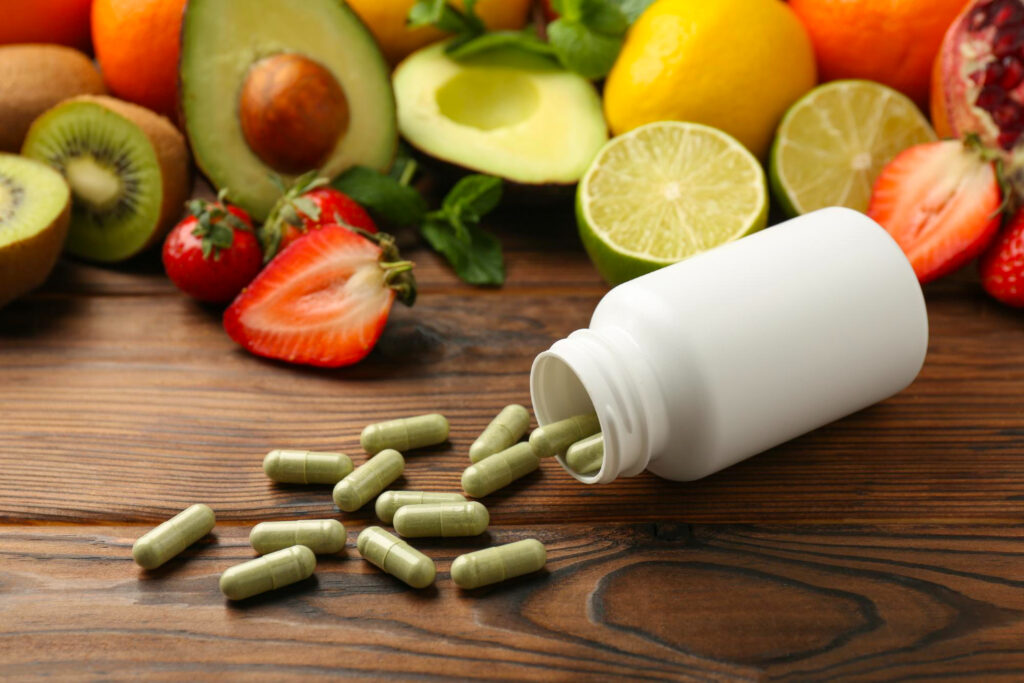
There is a paradox in modern medicine. On the one hand, pharmacy shelves are crammed with ‘miracle pills’ for the immune system and eternal youth, which people buy by the handful. On the other hand, patients with genuine deficiencies endure months of declining energy, viewing dietary supplements as useless ‘placebos’.
The truth is that dietary supplements are neither magic nor a substitute for food. They are a ‘medical crutch’. If a person has broken their leg (a deficiency has arisen), a crutch is vital. If, however, the leg is healthy, walking with a crutch is not only inconvenient but also harmful – muscles atrophy and gait deteriorates. Evidence-based medicine regards supplements solely as a tool for solving specific problems in specific situations.
Why whole foods are more effective than any pharmacy-based supplements
Nature has created food as a complex biological cocktail, where hundreds of substances work in synergy. Scientists call this effect ‘nutritional synergy’. For example, vitamin E in a capsule is just a single substance, whereas in a handful of nuts it is a whole group of tocopherols and beneficial fats that help each other to function. According to the WHO, no supplement can fully replicate this natural complexity.
When we try to replace a meal with a handful of vitamins, we are merely getting ‘isolates’ – elements taken out of context. It is like trying to assemble a car with only a steering wheel and wheels, but without a body or an engine. With a balanced diet, an excess of vitamins (such as B vitamins or vitamin C) simply isn’t retained – the kidneys flush out the surplus within a couple of hours. However, the pace of modern life dictates its own terms. We often consume a lot of calories but critically few nutrients. This is how ‘hidden hunger’ arises, when, despite a full stomach, the body’s cells are literally depleted due to a lack of micronutrients.
When supplements are truly necessary
Experts identify six clear scenarios in which the body begins to malfunction without additional support.
Laboratory-confirmed deficiency
This is the only ‘ironclad’ reason to open a jar of supplements. You cannot prescribe supplements for yourself simply because you ‘feel down’ or your ‘nails are splitting’.
- Iron deficiency and lack of oxygen. If the body’s iron stores (ferritin) are depleted, eating a bucketful of apples is pointless. Here, therapeutic doses are needed to ‘top up the tank’ and supply the cells with oxygen.
- Vitamin D and bone strength. For those living in northern latitudes, this is ‘sunshine in a capsule’. Without it, calcium simply doesn’t reach the bones, ‘passing right by’.
- Vitamin B12 and protection of the nervous system. A deficiency of it is a direct blow to the nervous system. Without it, the ‘insulation’ of our nerve fibres breaks down, leading to numbness in the limbs and a foggy head.
Periods of increased demand
There are times when the body needs to build a ‘new structure’, and standard supplies of building materials are insufficient.
- Pregnancy and foetal development Folic acid is the essential ‘blueprint’ for the proper formation of the foetal neural tube. A delay of just a couple of weeks in taking it can cost the child their health.
- Growth and skeletal development The adolescent skeleton grows faster than we can keep up with. Calcium and phosphorus during this period lay the foundation for strength for the rest of their life.
Restricted or specific diets
Any exclusion of an entire food group from the diet is a conscious risk.
- Veganism and the risks of nutrient deficiency. Vitamin B12 is produced only by bacteria in animal organisms. A vegan cannot obtain it from plants. This is a biological fact that requires compensation through supplements.
- Diets and strict calorie restrictions. On a diet of fewer than 1,500 kcal, the body switches to a strict energy-saving mode. It is physically impossible to obtain the required amount of vitamins from two lettuce leaves.
Absorption disorders and malabsorption
Sometimes the problem is not what we eat, but that the gut has ‘closed its doors’ to nutrients.
- Gastrointestinal diseases and absorption problems. In cases of gastritis or coeliac disease, the gut’s absorptive surface is inflamed. Vitamins simply pass through.
- Medicines that steal nutrients and their impact on metabolism. Heartburn medications (omeprazole, etc.) alter stomach acidity in such a way that magnesium and B12 are no longer absorbed. Metformin (for diabetes) acts in a similar manner.
Age-related changes
After the age of 65, the ‘factory settings’ go out of kilter. The stomach produces less acid, and the kidneys are less effective at activating vitamin D. To avoid brittle bones and loss of muscle mass, older people often require additional support, which a standard portion of porridge no longer provides.
Geographical factors
Geography dictates its own rules. If the soil in your region lacks iodine or selenium, these minerals will be absent from local produce too. In such areas, supplements are a way to avoid widespread thyroid problems.
Cases where supplements are NOT beneficial
Evidence-based medicine warns against three major mistakes.
- Vitamins for vitality. Large-scale studies have confirmed that taking multivitamins ‘just in case’ does not protect against cancer or heart attacks. They simply make your urine more expensive.
- Detox and body cleansing. The liver and kidneys work 24/7. No supplement will ‘scrub’ them clean. The best detox is clean water and avoiding alcohol.
- Replacing primary treatment Magnesium will not cure high blood pressure, and blueberries will not restore vision in cases of cataracts. A supplement is a support, not a cure.
Risks of uncontrolled intake
Many believe: ‘Natural means safe’. This is a dangerous misconception.
- Toxicity due to accumulation. Vitamins A, D, E and K are fat-soluble. They are not excreted in urine but accumulate in the liver like a poison. An excess of vitamin A can literally ‘eat away’ at the liver.
- Risk of developing cancer. An excess of beta-carotene in smokers has been proven to increase the risk of lung cancer.
- A war of nutrients within the body. Calcium ‘competes’ with iron for absorption. By taking them together, you get neither.
Special considerations for taking supplements during pregnancy
During this period, the cost of any mistake is the life and health of the unborn child. The mother’s body is working under extreme strain, allocating resources. Doctors are extremely cautious with prescriptions, as certain substances can cross the placenta and directly affect foetal development.
Key areas of nutritional support.
- Folate (B9) Is fundamentally important for cell division. Taking folic acid before conception and during the first trimester reduces the risk of neural tube defects in the foetus by 70%.
- Iodine Essential for the synthesis of thyroid hormones in both mother and baby. Iodine deficiency is the leading cause of preventable mental development delays.
- Iron By the middle of pregnancy, a woman’s blood volume increases by one and a half times. Without additional iron reserves, foetal hypoxia (oxygen deprivation) develops.
Critical risk due to excess vitamin A (retinol) Ordinary vitamin A in high doses is a potent teratogen. This means it can cause severe, often fatal, birth defects of the heart, brain and limbs in the baby. At the same time, beta-carotene (a vitamin precursor found in vegetables) is considered safe, as the body processes exactly the amount it needs. This is precisely why any multivitamins for pregnant women should only be prescribed by a doctor – self-medication is unacceptable here.
A practical step-by-step guide for healthcare professionals
A sensible approach to health looks like this.
- Listen to the symptoms. You’re not just tired; you may have an iron deficiency.
- Check the facts. Take a blood test for ferritin, vitamin D and key indicators.
- Change your diet. Add what’s missing to your diet (liver, fish, greens).
- Add a little extra support. If your diet is lacking, we prescribe a supplement in the right dose and only for a limited time.
Dietary supplements are not sweets and are not a mandatory part of breakfast. They are a powerful tool for improving your health. If your ‘engine’ is running smoothly, there’s no need to pour in unnecessary additives. But if a warning light comes on – see a specialist, get tested, and use only those supplements that your cells really need right here and now.
FAQ: Answers to frequently asked questions
Do I need to take Omega-3 if I don’t like fish?
Yes. Our brain needs fatty acids (EPA and DHA). If you don’t eat oily herring or salmon twice a week, supplements will help protect your blood vessels. Vegetable oil (linseed oil) is no substitute – the body absorbs less than 5% of the beneficial fats from it.
Does vitamin C help prevent illness?
No. It does not protect against viruses. But if you’ve already fallen ill, it can shorten the duration of the illness by half a day. However, megadoses (over 1000 mg) often put a strain on the kidneys, causing stones.
Why are multivitamins often a waste of money?
Because inside the tablet is a ‘communal flat’ where the residents are at odds with one another. Zinc drives out copper, and calcium blocks iron. Single-ingredient supplements work more precisely and effectively.
Can you take vitamins and coffee together?
It’s better to space them out. Caffeine and tannins bind to beneficial substances and flush them out of the body, preventing them from being absorbed. Wait an hour after breakfast.
How can you tell a high-quality dietary supplement from a fake?
Look for the logos of independent experts on the bottle: GMP, USP or NSF. This guarantees that the capsule contains exactly what is stated on the label, and that there is no mercury or mould present.
Do you need to take supplements all the time?
You only take them continuously if you cannot get the nutrients any other way (for example, B12 for vegans). Everything else is taken in courses: once the deficiency is corrected – get your blood tests checked – then take a break.
About The Author