Rules for seasonal skincare
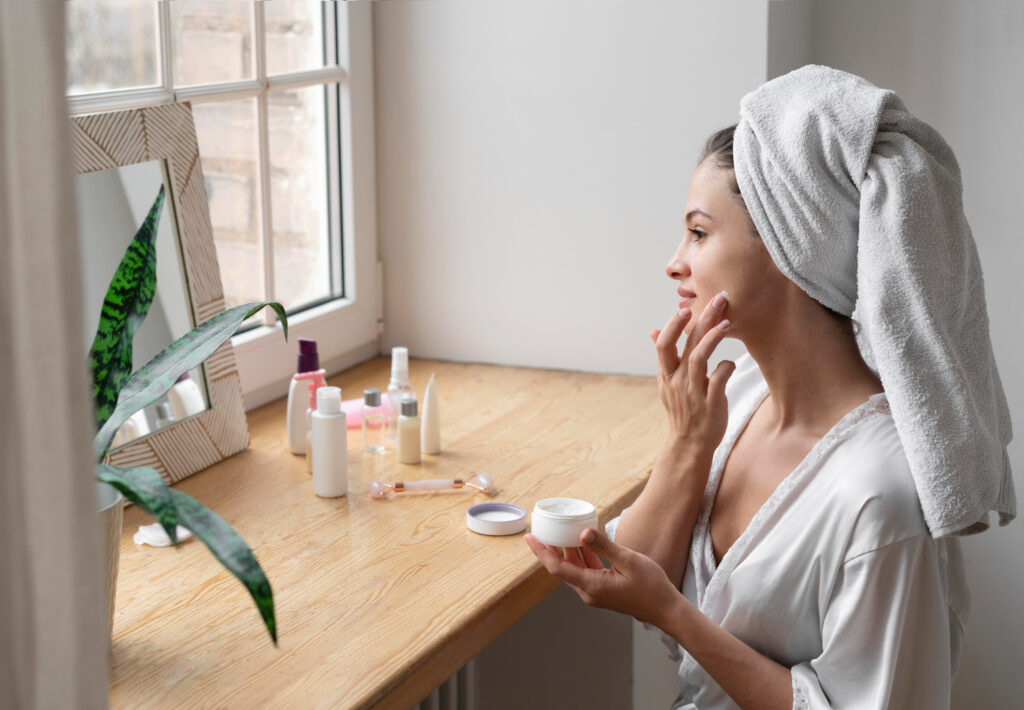
You’ve probably noticed: that favourite cream which worked wonders for your skin in the summer suddenly feels like a heavy mask in the winter, yet your face still feels tight underneath it. Or the spring serum that gave you a radiant glow causes oily shine and breakouts in July. This doesn’t mean your cosmetics have gone off. It means your skin is a living organ trying to adapt to ‘climatic swings’.
In medicine, the skin is considered the front line of defence. If we don’t help it change its ‘equipment’ in time, the protective barrier breaks down. As a practising doctor, I see the result of this every day: from ‘unexplained’ dryness to premature wrinkles that might not have appeared for another ten years.
The physical basis of changes in skin condition
Your skin is not a sealed plastic sheet, but a complex filter. Its condition depends directly on what is happening outside:
- Humidity (the ‘leaky bucket’ effect): As soon as the heating is turned on, air humidity drops below 40%. The air becomes ‘thirsty’ and starts drawing moisture directly from your cells. This process is called transepidermal water loss (TEWL). Imagine a bucket of water: if it has micro-cracks, the water will escape. Winter skincare is like ‘patches’ for this bucket.
- Temperature (constriction and oil): Cold causes blood vessels to constrict – the skin ‘starves’ without blood flow. Heat, on the other hand, causes the pores to work overtime, expelling excess oil (sebum), which oxidises and clogs the pores.
- Ultraviolet (the invisible enemy): Type A (UVA) rays are always active. They do not burn like the summer sun, but they ‘penetrate’ the skin right through, even through glass, destroying collagen – our internal framework.
Features of men’s skin
Men’s skin is 20–25% thicker due to testosterone. It is denser, contains more collagen, and ages later. But there is a ‘but’:
- Aggressive shaving: Every pass of the blade is a micro-trauma. You are literally removing the top protective layer. If you then go out into the cold, your skin will react with irritation and ingrown hairs.
- Active pores: Men’s skin is naturally oilier. In summer, this becomes a problem: sweat, oil and dust create the perfect environment for inflammation.
Conclusion: Men don’t need ‘feminine’ 10-step rituals, but it is crucial for them to restore the skin barrier after shaving and protect themselves from the sun.
Winter skincare
In winter, the main task is to prevent the skin from ‘drying out’ from within.
What to do:
- Forget about cleansing ‘until it squeaks’: Harsh gels strip away the last traces of oils that retain moisture. Switch to a cleansing milk or oils.
- Look for ‘repairing’ ingredients: The cream should contain ceramides (the ‘cement’ for skin cells), squalane or fatty acids.
- The golden rule: Apply the cream at least 40 minutes before going out. The moisture in the cream needs to be absorbed; otherwise, in the cold, it will turn into microcrystals and ‘irritate’ the skin.
Spring awakening and a vitamin detox
After winter, the skin often looks grey and dull. This is hyperkeratosis – a layer of dead cells that the skin hasn’t had time to shed.
What to do:
- Gentle exfoliation: Use enzyme powders. They dissolve the ‘glue’ between dead cells without scratching the face, unlike scrubs.
- Antioxidants: Vitamin C in serums is a ‘power boost’ for the skin, restoring its colour.
Summer mode: lightness and reliable protection
Summer is the season of the ‘sun tax’. We pay for our tan with the quality of our skin.
What to do:
- SPF is not an option, but a necessity: Use broad-spectrum protection (UVA/UVB). SPF 30 is sufficient for city life.
- Light textures: Replace heavy creams with fluids or gels. The skin needs to breathe.
Autumn recovery
In autumn, we treat the effects of the summer sun: pigmentation and dryness.
What to do:
- Time for active ingredients: You can introduce retinol (vitamin A) and acids. They renew the skin, remove blemishes and stimulate the production of new collagen.
The effect of hormonal changes on skin condition during pregnancy
During this period, the skin becomes unpredictable. Progesterone makes it more sensitive.
- Pregnancy face mask: Due to hormones, any walk in the sun without protection can result in brown patches on the forehead and cheeks (chloasma). SPF 50+ is your best friend.
- Safety: Retinol and high concentrations of salicylic acid are off-limits – they may be unsafe for the baby. Use azelaic acid (it’s great for treating breakouts) and vitamin C.
Common mistakes and practical tips
- “I don’t use cream, my skin is already oily”: Dehydrated oily skin will produce even more oil to combat dryness. Everyone needs moisturising.
- Using thermal water in the office: Sprayed it on and left it to dry? Wrong. As it evaporates, it will draw moisture from your skin. Always pat your face dry with a tissue.
- Scrubs for spots: You’re simply spreading the infection all over your face. If there’s inflammation, wash gently only.
Healthy skin isn’t about expensive cosmetics, but about understanding the basics. Protect it from the sun, don’t over-dry it with harsh cleansers, and apply lipids when it’s cold outside. Your skin is your protective suit; keep it in good condition.
FAQ: Answers to frequently asked questions
Do men need to use eye cream?
Yes, if there is puffiness or dark circles. The skin around the eyes is just as thin in men as it is in women.
Can I use last year’s sun cream?
No. The filters in the formula break down, especially if the tube has been left in the heat. Buy a new one every season.
Why does my skin dry out even though I drink plenty of water?
Water on the inside is good, but if the ‘roof’ (protective barrier) is leaking, the water will still escape. You need to repair the barrier with creams.
Why do you need a toner?
Tap water disrupts the skin’s pH balance. A toner restores it to normal in seconds, so that subsequent products work better.
Does collagen powder help?
Clinical data suggests: yes, but only with long-term use (from 3 months) and at the right dosage. But this doesn’t replace external skincare.
How do you choose a cream if you don’t understand the ingredients?
Look for the words ‘non-comedogenic’ (doesn’t clog pores) and ‘fragrance-free’ if you have sensitive skin.
About The Author