Basic rules for taking medicines safely
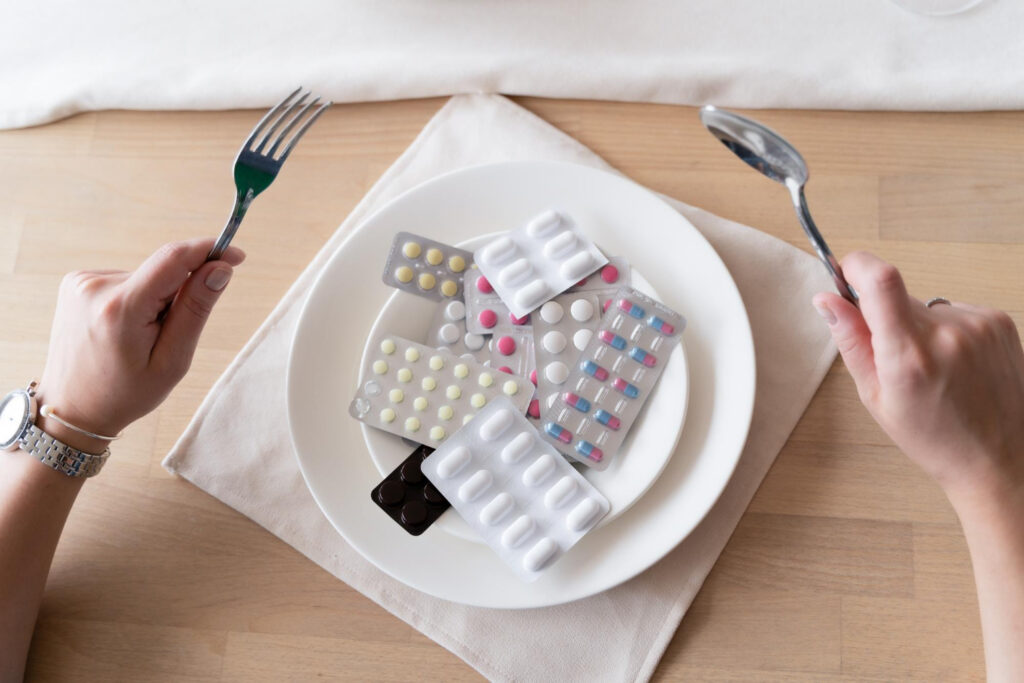
Every time you open your home medicine cabinet, you are entering the realm of complex chemistry. There is a dangerous misconception in society that if a medicine is sold over the counter, it is safe by default. But in medicine, there is no such thing as absolute safety; there is only a balance between benefit and risk.
Imagine a real-life scenario where someone takes a headache tablet and, half an hour later, takes a cold remedy, unaware that both contain paracetamol. The combined dose is close to a toxic level. For the liver, this amounts to a chemical shock that can lead to drug-induced liver damage. Understanding how medicines work is not a matter of erudition, but a basic survival skill.
The mechanics of how a medicine turns into poison
To ensure that dosage guidelines do not seem like empty prohibitions, it is important to understand the path a medicine takes through the human body.
How this actually happens:
- The liver as the body’s main customs post. Almost everything we swallow passes through the liver. Liver enzymes break down the molecules of the substance. If you take several medicines at once, they begin to compete for the enzymes’ attention. As a result, one medicine is not processed and accumulates to dangerous levels, whilst the other simply does not work.
- The kidneys as a filtration system. If the kidneys are working more slowly due to age or illness, the medicine remains in the body longer than it should. This is similar to a situation where water is poured into a tank with the drain plugged, which sooner or later leads to intoxication.
- Blood as a transport system without a precise destination. The tablet does not know exactly where the source of the pain is. It is carried throughout all the tissues. Medication for joint pain inevitably enters the blood vessels of the stomach and kidneys, where it can cause damage. Side effects are a direct consequence of the drug’s systemic effect on the entire body.
Principle one: the necessity of a diagnosis
The main mistake lies in taking medication just in case.
The real problem: the widespread use of antibiotics for viral infections leads to serious consequences. Antibiotics destroy only bacteria. By taking them for a viral infection, a person does not treat the illness, but destroys the protective microflora and triggers the growth of superbugs, which eventually cease to respond to treatment.
The WHO identifies antibiotic resistance as one of the main threats to humanity.
Principle Two and the doctor’s role in identifying hidden risks
The package leaflet is written for an ideal patient who does not exist in reality.
- Individual background. A person may have asymptomatic gastritis. Under the influence of common painkillers, the stomach lining’s protective barrier is compromised, leading to acute bleeding within a matter of days.
- Drug interactions. Ordinary aspirin can critically enhance or weaken the effect of blood pressure or diabetes medication, triggering a crisis or fainting.
Principle three and the rule of minimal sufficiency
Safe therapy involves the lowest possible dose to achieve the desired effect and the shortest possible duration of treatment.
A common mistake Many people believe that a double dose will work faster. The body has a limited number of receptors for the drug. When these are occupied, the extra dose does not treat the condition but simply circulates in the blood, poisoning the liver and kidneys.
Principle four: critical periods of life
- Pregnancy. The placenta acts as a filter with large pores through which most substances pass. During the first trimester, organ formation takes place, so even a single tablet of a certain antibiotic can cause irreversible developmental abnormalities.
- Old age. After the age of 65, the volume of fluid in the body decreases. Medicines can accumulate and cause confusion or heart rhythm disturbances.
Principle five and the insidiousness of common remedies
- Painkillers. Regular use more than a few times a week can cause medication-overuse headaches, which arise precisely because of an excess of tablets.
- Cold powders. Almost all of them contain paracetamol. Exceeding the maximum daily dose of 4 grams poses a real risk of liver cell damage.
- Vasoconstrictor drops. These cause medication-induced rhinitis after just a week of use, after which the blood vessels in the nose cease to function independently.
Principle Six and the Myths About the Safety of Natural Ingredients
Herbs are powerful chemical factories with unpredictable concentrations of active substances.
- St. John’s wort. Activates liver enzymes, causing contraceptive pills or heart medication to stop working.
- Liquorice. Retains sodium and excretes potassium, leading to oedema and a dangerous rise in blood pressure.
Ways to avoid mistakes and practical advice
- Use only plain water. Juices and tea contain active substances that alter the chemical properties of the tablet.
- Follow dietary guidelines. Instructions to take after meals mean that the stomach lining needs to be protected. Instructions to take before meals indicate that food will interfere with the absorption of the medicine.
- Complete the full course of treatment. This applies particularly to antibiotics. If you stop taking them at the first sign of relief, the strongest bacteria will survive in the body, which the original medication will no longer be able to combat.
Expert summary
The safety of medicines lies in the discipline of their use.
- You must always know the exact name and purpose of the medication.
- It is important to inform your doctor about all supplements and herbal remedies you are taking.
- You should not rely on other people’s experiences, as everyone’s biochemistry is unique.
There are no such things as ‘safe’ medicines; there is only appropriate use under the supervision of a specialist.
FAQ: Answers to frequently asked questions
Why should you not take tablets with grapefruit juice?
This juice inhibits the enzyme that breaks down medicines in the gut. As a result, the concentration of the drug in the blood can increase several-fold, which is equivalent to a severe overdose.
Can you split a tablet in half?
This is only permissible if there is a special score line. Otherwise, you risk damaging the protective coating or causing an uneven distribution of the active ingredient.
What should I do if I feel unwell after taking a tablet?
You should have your stomach pumped, take a sorbent and seek medical attention immediately. Waiting for your condition to improve on its own can be dangerous.
Can you take medicines that have passed their expiry date?
No, as chemical compounds break down over time. At best, the tablet will not help; at worst, the breakdown products will cause a severe allergic reaction or poisoning.
Why should you not drink alcohol whilst undergoing treatment?
Alcohol and medicines are processed by the same liver enzymes. Whilst the liver is busy processing alcohol, the medicine accumulates in the blood to dangerous levels or triggers a toxic reaction.
Do immune-boosting vitamins help prevent illness?
The immune system is a complex system that cannot be boosted by a pill. Vitamins only work when there is a genuine deficiency; in other cases, they place an unnecessary strain on the kidneys.
About The Author