How to choose the right equipment for home workouts
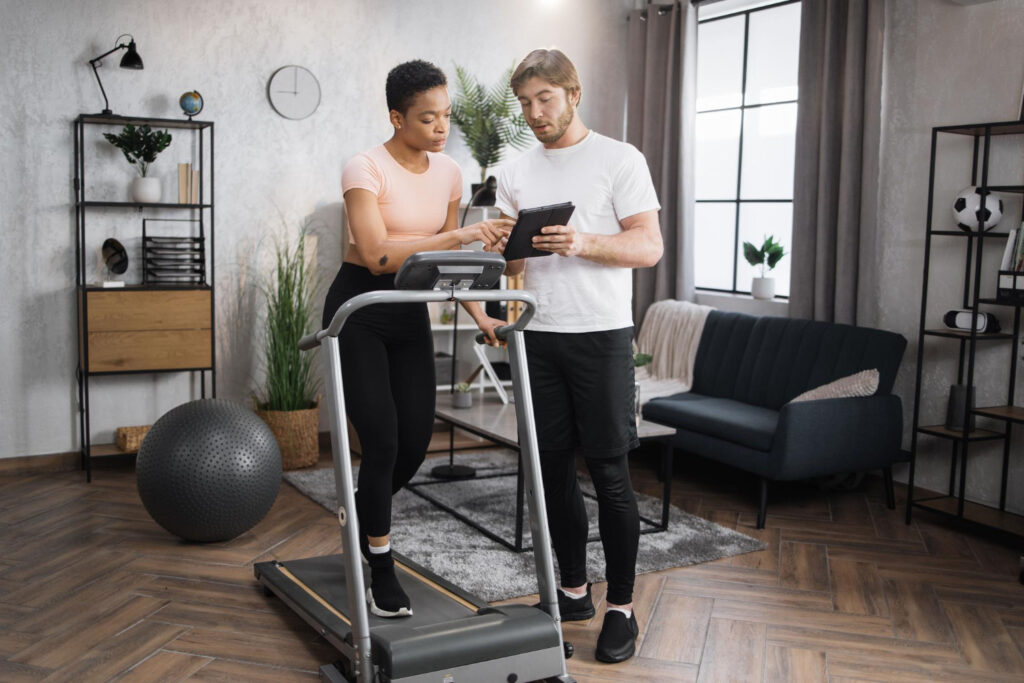
Buying a piece of exercise equipment is often like playing the lottery: in half the cases, it ends up as an expensive clothes rack, whilst in the other half, it leads to a visit to the doctor. In medical practice, we regularly encounter patients who have ‘earned’ serious problems simply by deciding to train at home on unsuitable equipment. For men, this often results in inguinal hernias or prostate problems, and for women, knee pain or pelvic organ prolapse. Equipment is not just metal; it is a tool that can either heal or maim.
Why choosing the right equipment is a medical issue
According to WHO standards, an adult needs 150–300 minutes of physical activity per week. But if the equipment is chosen incorrectly, these minutes turn into micro-injuries. The main risks of making a mistake:
- Joints under strain. If the mat is too thin or the platform wobbles, the load is placed on the ligaments rather than the muscles. The result is tendon inflammation (tendinitis) and chronic pain.
- Uneven load distribution. A piece of equipment that cannot be adjusted to your height forces the body to bend unnaturally. Instead of the target muscles, the lower back starts to work, leading to hernias.
- Abandoned workouts. If the equipment is uncomfortable or difficult to assemble, the brain finds hundreds of reasons to skip the workout.
Key principle No. 1: Taking your body’s actual limitations into account
Before buying dumbbells, you need to carry out a ‘health check’.
- Back problems. If you have disc protrusions or hernias, forget about jumping. Your tool is resistance bands. They provide gentle resistance that strengthens muscles without compressing the spinal discs.
- Excess weight. If your body mass index is over 30, running is contraindicated. Knee joints are not designed to withstand such impact loads. A safe alternative is a recumbent exercise bike (with a backrest), which takes the weight off the knees.
- Varicose veins. Lifting heavy weights whilst standing increases blood pooling. Equipment should allow you to train lying down or sitting (balls, resistance bands).
Key principle No. 2: Safety of materials
In medicine, sterility is important; in sport, the reliability of materials is key.
- Resistance bands with safety features. Ordinary rubber dries out over time. If it snaps under tension, the impact can be very severe. Choose bands with a fabric cover – this protects against facial and eye injuries.
- Anti-burst fitness ball. The ball must be marked ‘Anti-Burst’. If you accidentally puncture it, it will slowly deflate beneath you rather than burst. This is critically important for the safety of pregnant women.
- Mat grip. Cheap mats slide across the floor. If your hands slip apart during a plank, you could dislocate your shoulder. Look for mats made of rubber or TPE – they literally stick to your palms and the floor.
Key principle no. 3: Space organisation
A piece of kit that gets in the way of walking will quickly start to annoy you.
- Access to fresh air. Training in a stuffy corner without a window is a sure-fire way to cause a rapid heartbeat (tachycardia) and a headache. During exercise, the body consumes significantly more oxygen.
- Work area. You need at least 2 metres of free space for TRX suspension training or leg swings. Cramped conditions ruin your exercise technique.
Key principle No. 4: Versatility and progress
Muscles adapt to the load within 2–3 weeks. To see results, you need to increase the load gradually.
- Adjustable dumbbells. Better than a single pair of 2 kg dumbbells. They allow you to add weight in 500-gram increments, which is important for strengthening ligaments without causing stress.
- TRX suspension straps. Allow you to use your own body weight. The angle of inclination changes the load: from very light to professional-level.
- Step platform. Choose height-adjustable models. It serves both for cardio and as a support for strength exercises.
Key principle No. 5: Simplicity is the key to consistency
If you need to spend 15 minutes studying the instructions to set up the machine, you won’t use it. Mechanical adjustments are ideal for home use. A simple weight-selection knob on dumbbells is better than a complex electronic display that might break down.
Special recommendations for women
In the female body, physiology is closely linked to hormonal balance, and this must be taken into account.
- Pregnancy. Due to the hormone relaxin, ligaments become more supple. Dislocations can occur even on flat ground. Avoid all wobbly platforms. The best aid is a fitness ball; it takes the strain off the sacrum and lower back.
- After childbirth. If you have diastasis (separation of the abdominal muscles), forget about heavy weights. Use small balls and Pilates rings. They help strengthen the pelvic floor muscles without putting dangerous pressure on the abdomen.
- The myth about belts. Tight ‘slimming’ belts are harmful. They take the work off your own abdominal muscles, causing the stomach to become even weaker and the back to start hurting.
Practical summary and recommendations
From a medical perspective, the ideal home kit is:
- Rubber mat (joint protection and stability).
- Fabric fitness bands (safe resistance).
- Explosion-proof fitness ball (relief for the back).
- Adjustable dumbbells (gradual progression without injury).
These tips are based on WHO recommendations, PubMed data on biomechanics, and protocols from the American College of Obstetricians and Gynaecologists (ACOG). Remember: equipment should help you become healthier, not create new problems.
FAQ: Answers to frequently asked questions
Dumbbells or water bottles?
Bottles are awkward to hold, and your wrist is under constant strain. This is a sure-fire way to cause inflammation of the wrist tendons. It’s better to buy a single set of high-quality dumbbells with a comfortable grip.
How do I choose the right size for a fitness ball?
Sit on it: your hips should be parallel to the floor, and your knees bent at a 90-degree angle. A diameter of 65 cm is usually suitable for a height of 165–175 cm.
Do you need a treadmill to lose weight?
Not necessarily. A good set of exercises with resistance bands burns just as many calories, whilst also strengthening your core muscles, which a treadmill does not do.
Can you exercise barefoot?
No. Even at home, you need trainers with good heel support. This protects the foot from deformation and prevents heel pain (heel spurs).
Why does the mat give off a strong smell?
This is a sign of cheap and toxic materials (phthalates). When breathing heavily during exercise, you inhale these substances, which can cause allergies or shortness of breath.
When should you replace your fitness bands?
As soon as you notice the slightest fraying or white spots when stretching. The rubber wears out in 6–8 months and needs to be replaced before it snaps.
About The Author